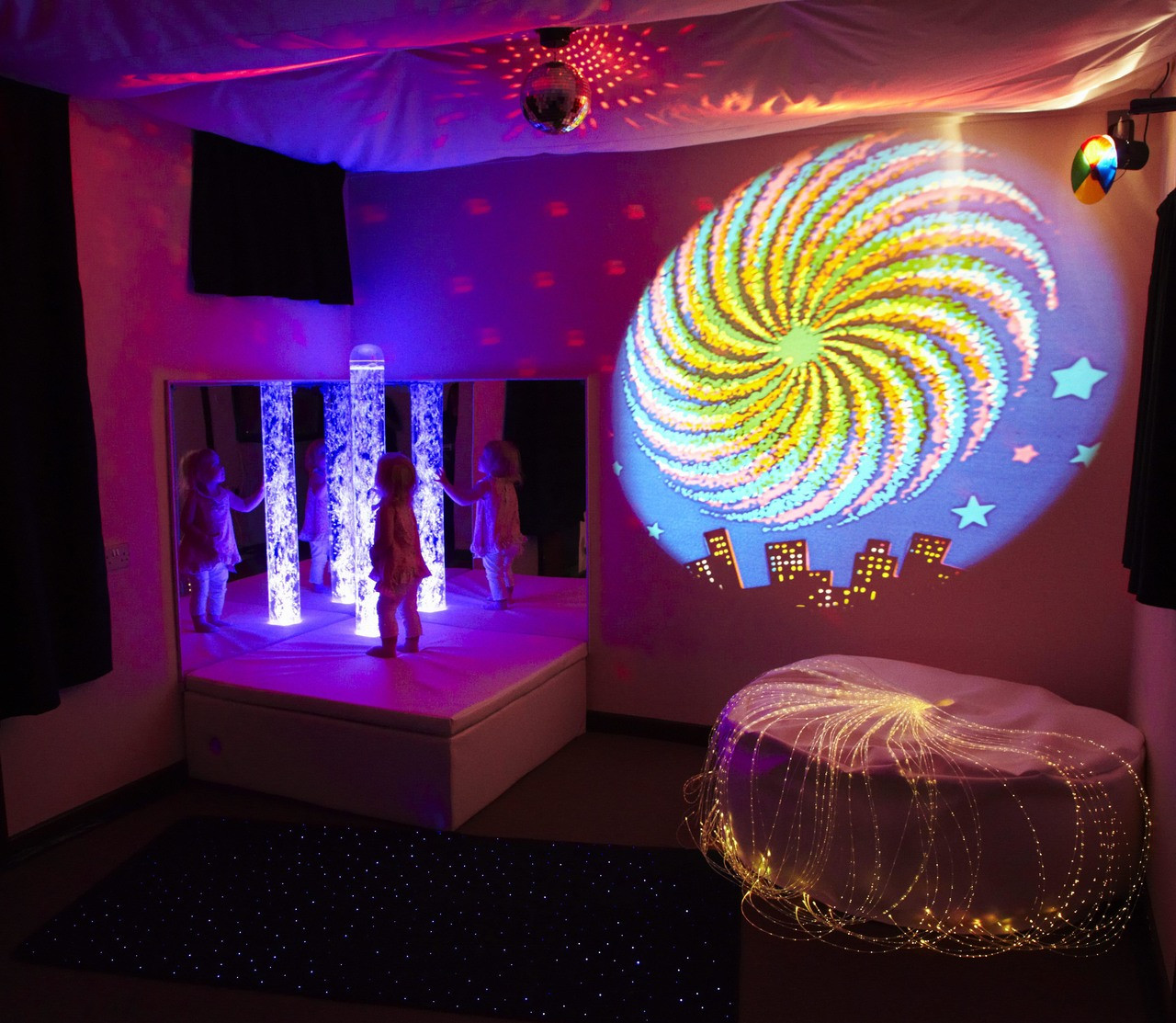
Why Your School’s Sensory Room Isn’t Working (And How to Fix It Properly)
Why Your School’s Sensory Room Isn’t Working (And How to Fix It Properly)
Across Ireland and the UK, I’m hearing the same message from principals, SENCOs and inclusion leads:
“We invested in the room. The equipment is good. But it’s not changing outcomes.”
Many schools installed sensory rooms using Covid recovery funding, capital grants or determined PTA fundraising. The space looked impressive. Staff were optimistic.
Now — one to three years on — leadership teams are under pressure to evidenceimpact.
Why is it underused?
Why are behaviour patterns unchanged?
Why are staff hesitant?
Why isn’t it clearly supporting EHCP or IEP targets?
What will we say at inspection?
If yourschool sensory room is not working, the issue is rarely the bubble tube or the swing. It’s almost always about structure, training and strategy.
Let’s diagnose it properly.
The 5 Signs Your School Sensory Room Isn’t Working
1. It’s Being Used as a “Calm Down” Room Only
In many schools, the sensory room has become a reactive space.
A Year 3 pupil tips into crisis during maths → they’re removed → they calm down in the room → they return.
On paper, that feels supportive. In practice, it creates dependency.
Reactive use:
Accessed only after dysregulation
Tied to behaviour incidents
No explicit skill teaching
Seen by pupils as escape or reward
Proactive use:
Scheduled before predictable triggers (e.g., transitions, assemblies)
Linked to individual regulation plans
Adult-led modelling of strategies
Builds body awareness and self-monitoring
If pupils only access the room at breaking point, they are not learning to recognise early physiological cues — tight shoulders, fast breathing, clenched jaw. They’re simply recovering.
That’s containment, not regulation.
2. Staff Aren’t Confident Using the Equipment
This is the most common finding during asensory room audit checklistreview.
Staff say things like:
“I’m not sure how long they should stay.”
“I don’t know which pupils actually need deep pressure.”
“We were shown once when it was installed.”
Without structured CPD, even the best-designed room becomes underused.
Common gaps:
No shared language around regulation (e.g., Zones of Regulation-style vocabulary)
No written protocol for session length
No guidance on matching tools to need
Fear of overstimulation
No clarity on supervision ratios
Equipment does not createsensory room impact in schools.
Confident adults do.
When staff understandwhya pupil needs proprioceptive input before literacy, usage becomes purposeful — not hesitant.
3. There’s No Entry or Exit Structure
Observe what actually happens.
A pupil enters dysregulated. They sit on a beanbag. Ten minutes later they leave.
What’s missing?
No quick regulation check-in
No defined goal for the session
No reflection on what worked
No structured reintegration plan
A regulation session should follow a clear arc:
Arrival– “Where is your engine right now?”
Targeted input– Chosen based on need (movement, deep pressure, low stimulation)
Reflection– “What changed in your body?”
Transition plan– Clear next step back into class
Without structure, the space becomes passive downtime.
That’s not therapeutic. It’s just quieter.
4. The Room Is Overstimulating
More equipment does not equal better outcomes.

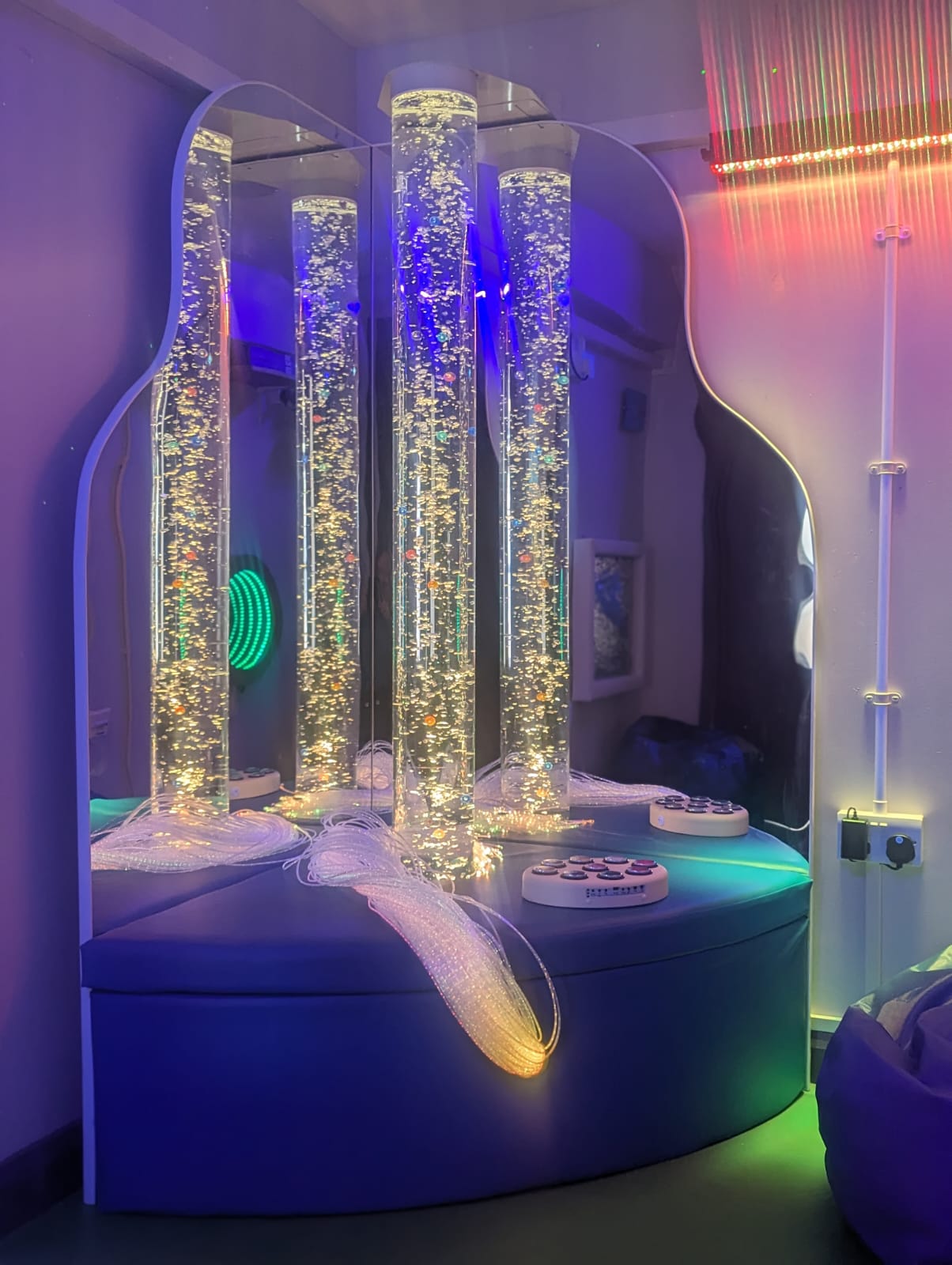
Across mainstream and special schools, I often see:
Multiple light sources competing
Continuous music layered with sound effects
Bright wall colours plus projection lighting
No defined zoning
Everything switched on “because it looks good”
For many neurodivergent pupils, this increases arousal rather than reduces it.
A well-designed regulation space should include:
Clear visual zones
One primary sensory focus at a time
Adjustable lighting
Defined quiet corner
Minimal visual clutter
Whenimproving sensory regulation spaces, simplification is often the breakthrough.
5. There’s No Way to Measure Impact
Under inspection frameworks such asOfsted,Education and Training Inspectorateand theDepartment of Education, leadership teams are increasingly asked:
“What difference is this making?”
If you’re not tracking:
Behaviour incidents (frequency and severity)
Time out of class
Reintegration time
Emotional vocabulary progression
Attendance for identified pupils
Links to EHCP / IEP targets
…then your room will always feel anecdotal.
Impact must be visible in data.
Why Sensory Rooms Fail Without a Whole-School Strategy
Equipment Alone Doesn’t Teach Regulation
Regulation is relational.
It develops through:
Co-regulation with a calm adult
Explicit modelling of breathing or grounding
Repetition of language
Gradual release of responsibility
A bubble tube does not teach self-regulation.
An adult guiding a pupil to slow their breathing while observing the bubble tube does.
If classroom staff aren’t using the same language as the sensory space, pupils experience fragmentation — not consistency.
The Difference Between a Sensory Room and a Regulation Space
Not every pupil needs a fully immersive room.
There’s a key distinction between:
Therapeutic-style sensory rooms
Darkened environment
High sensory input
Specialist equipment
Often 1:1
And:
Educational regulation spaces
Simple zoning
Portable tools
Embedded within classroom routines
Used preventatively
Many schools searching for why theirschool sensory room is not workingdiscover the real issue is over-reliance on one separate room instead of building regulation capacity across the school.
The most effective schools extend regulation into corridors, classrooms and nurture spaces.
The Sensory Room Audit Framework (Free Checklist)
If your provision feels flat, start with a structured review.
Environment Audit
Is lighting adjustable?
Are there clearly defined zones?
Is there acoustic control?
Is furniture flexible?
Is the room decluttered?
Can pupils with physical needs access all areas?
Practice Audit
Have all staff received practical training?
Are there written usage protocols?
Is access planned or purely reactive?
Is session length defined?
Are pupils identified for proactive access?
Impact Audit
Are behaviour incidents tracked before/after use?
Is emotional literacy assessed termly?
Is reintegration time monitored?
Are EHCP/IEP targets linked directly to room usage?
Are patterns reviewed at SLT level?
Without data, impact remains invisible.
How to Turn It Around in 30–60 Days
You do not need to start again.
You need clarity.
Step 1: Re-Define Purpose
Move from:
“A place to calm down.”
To:
“A structured space to explicitly teach and practise regulation skills.”
Create a one-page purpose statement. Share it in briefing. Revisit it in CPD.
Step 2: Train Staff in Practical Regulation Strategies
Focus training on:
Understanding sensory processing differences
Recognising early dysregulation cues
Matching input to need
Co-regulation language
Structured entry/exit routines
In one Dublin primary school we worked with, usage doubled within six weeks once midday supervisors were trained — not just teachers.
Confidence drives consistency.
Step 3: Redesign the Space Around Zones


Create 3–4 clear zones such as:
Calm / low stimulation
Movement / proprioceptive
Focus reset
Reflection and reintegration
Switch off unnecessary stimuli. Label areas visually. Make expectations explicit.
Simplify before you add.
Step 4: Track and Review Impact
Agree three measurable outcomes for a half-term trial, for example:
30% reduction in crisis removals for identified pupils
Reduced reintegration time after dysregulation
Improved emotional vocabulary assessment scores
Review at 6–8 weeks.
That’s how you evidence genuinesensory room impact in schools.
A Real School Scenario
An Irish primary school contacted us because their room was locked most of the week.
Staff were unsure. Pupils viewed it as a reward. SLT couldn’t demonstrate impact.
Within eight weeks they:
Clarified purpose
Delivered whole-staff training
Introduced structured session templates
Simplified the environment
Linked usage directly to IEP targets
Began tracking reintegration time
The outcome wasn’t dramatic overnight change.
It was measurable improvement.
Fewer crisis escalations. Faster return to learning. Greater staff confidence.
The room became embedded in practice — not isolated from it.
Final Thoughts
If your school sensory room is not working, it doesn’t mean the investment failed.
It means the strategy hasn’t caught up with the space.
Equipment creates possibility.
Practice creates impact.
Free Sensory Room Audit Consultation
Already have a sensory room but unsure if it’s delivering measurable impact?
We offer afree 20-minute Sensory Room Audit callfor schools across Ireland and the UK.
We’ll help you:
Identify structural gaps
Clarify purpose
Strengthen practice
Define measurable outcomes
At Sensory Sphere, we don’t just supply equipment.
We help schools build regulation-informed environments that stand up to inspection — and genuinely support pupils.
